


Article Contribution by ACES Award Winner: Philip Yu, Founder of New Focus Textiles, recipient of Green Innovation Award
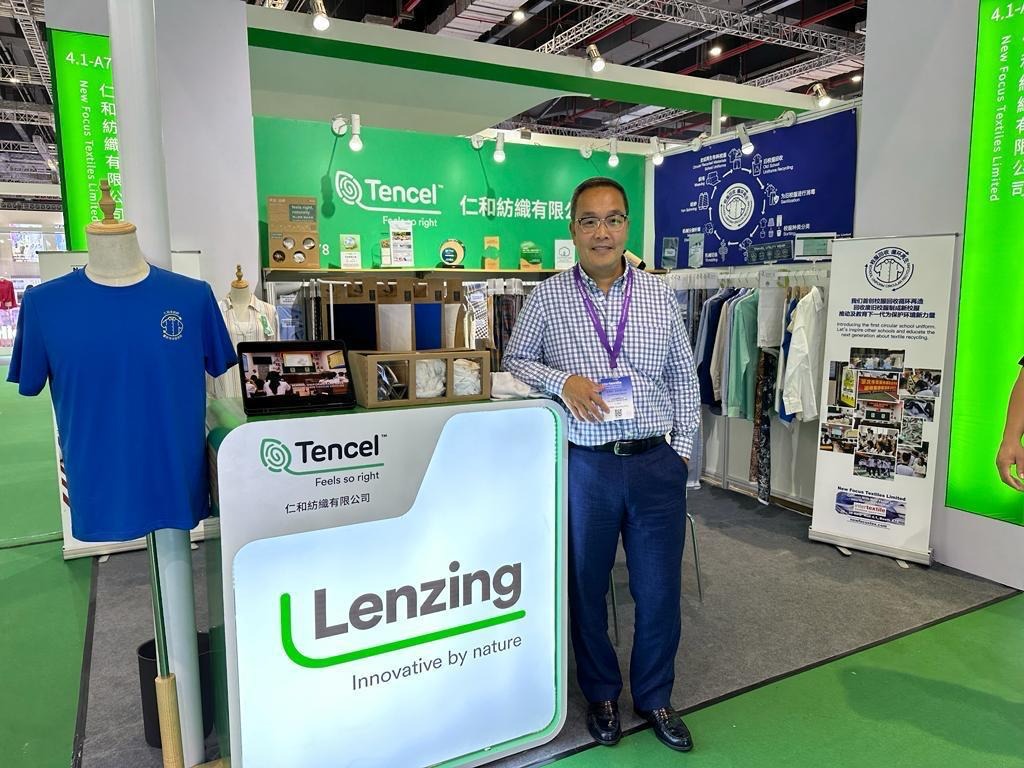
At New Focus Textiles, a woven fabric manufacturing company based in Hong Kong and China, we believe the future of textiles must be circular. Fabrics should be designed to live more than one life, and systems must be built to make that possible.
It is especially meaningful to share this story here, as New Focus has been honored with the ACES Green Innovation Award. This recognition underscores the progress we’ve made and the commitment of our team to building real, measurable changes in the textile industry. It is a reminder that our efforts are not only noticed but benchmarked against global standards of innovation and responsibility.
Starting With Education and Early Engagement (2021)
Our first step toward circularity was not in factories, but through education and early engagement with institutions. Beginning in 2021, we offered free take-back and recycling solutions to schools and hotels.
In schools, students donated old uniforms, participated in workshops on circularity, and received recycled cotton t-shirts in return. This provided us with post-consumer garments of consistent quality, allowing us to refine our recycling processes while helping students understand responsible textile practices.
Hotels presented a different challenge. Many already had established suppliers and were unfamiliar with adding new logistical steps into their operations. Schools, on the other hand, often felt they should be paid for used garments, rather than recognizing that recycling itself is a cost-intensive service we were offering free of charge.
These early experiences revealed a broader truth: recycling is still a new and unfamiliar step in many supply chains. Integrating circularity requires rethinking procurement, logistics, and even how value is perceived within existing business models.
Building Circular Capabilities Through Industry Collaboration
To grow industry engagement and connect with brands, we focused on collaboration within the textile ecosystem. We regularly participate in fabric conferences such as the Textile Recycling Expo and work closely with recycling partners to exchange ideas, demonstrate progress, and build industry confidence.
As part of our strategy to lead in recycled textiles for the fashion industry, we partnered with Mizuda, a major textile and green industrial corporation in China. Together, we invested in mechanical recycling equipment to produce recycled cotton collections embedded with Haelixa’s DNA markers. These markers allow brands and consumers to verify that the fibers are genuinely recycled by New Focus Textiles and meet the certification standards expected by leading apparel brands. Traceability has become a cornerstone in building trust and transparency in circular textiles.
Scaling Circular Materials Across Fibers
Alongside recycled cotton, we have expanded our work across other fiber types to give fashion brands greater flexibility in adopting circular materials.
We invested in OnceMore viscose from Sweden and Lenzing EcoVero™ fibers with Refibra technology, which are produced using recycled fabric pulp combined with wood pulp. Today, New Focus has developed the world’s largest collection of viscose fabrics made from recycled fabric pulp. These collections are showcased at fabric conferences in Europe and the United States throughout the year and are increasingly well received by European brands.
In parallel, we support collaborative efforts with our chemical recycling partner in Zhejiang province to develop textile-to-textile (T2T) recycled polyester. As polyester continues to grow in market share within fashion, providing T2T alternatives is critical to reducing reliance on fossil fuels. These initiatives demonstrate how circularity can be extended across multiple fiber categories, rather than being limited to a single material.
Challenges, Investment, and the Road Ahead
While we have been developing fabrics made from recycled cotton and recycled polyester for many years, we wanted to play a more active role in the logistics and recycling process itself - becoming solution providers for brands and textile-intensive businesses.
This transition has not been without challenges. Moving from legacy systems to circular operations required more than new machinery; it demanded a shift in mindset. Market education also remains ongoing, as recycling is not yet seen as a natural component of most supply chains.
In 2024–2025, we invested USD 1 million with our partners to build a mechanical recycling facility. While demand is still developing, the need has been clear for years. Quality in recycled textiles has become more consistent and refined, and brands are increasingly confident in integrating recycled fibers into their collections.
Circular fabric operations are not only possible - they can be scalable, commercially viable, and essential. Looking ahead, we will continue investing in circularity while expanding our work in greener dye technologies to reduce emissions and water usage. By 2026, we expect our environmental audits to reflect the impact of these investments. Beyond fibers, facilities, dyes, and production processes must all be evaluated carefully to continuously reduce our environmental footprint.
We invite brands and supply-chain partners to join us in building a textile industry where circularity and green technology are not the exception, but the standard.
What Other Industry Leaders Can Take From This
Our experience shows that circularity succeeds only when it is treated as a system, not a single product or initiative. Progress requires early investment, education across the supply chain, and built-in trust through traceability and verification. Most importantly, no company can advance circularity alone - collaboration and commercial viability are essential to making sustainable practices scalable and enduring.
This article is published in recognition of New Focus Textiles’ achievement as an ACES Award Winner, celebrating innovation and leadership in circular fabric operations.
.jpg)

.jpg)